
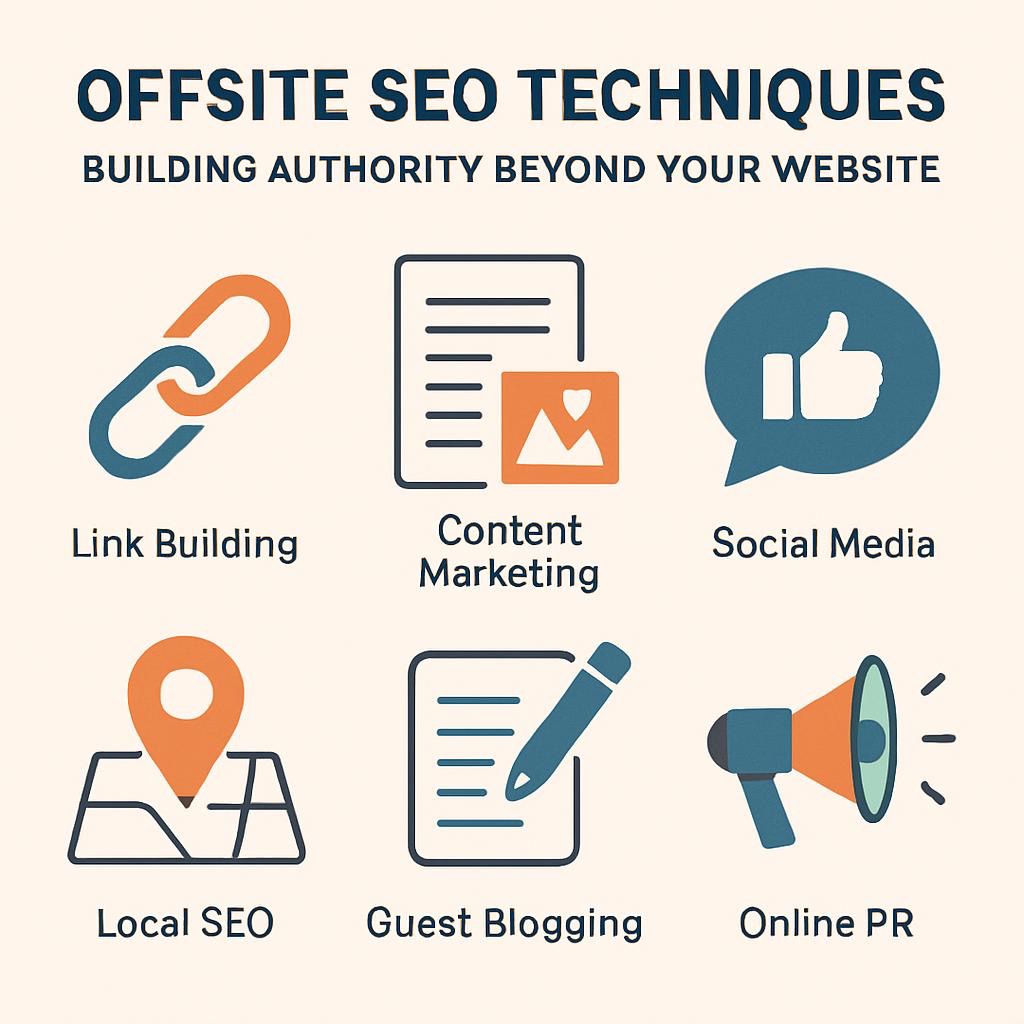
Offsite SEO, is any activity that you conduct outside of your website to increase your website and boost your search engine rankings. Offsite SEO builds trust and credibility through external signals rather than optimizing content or structure onsite. The most well-known offsite SEO factor is backlinks. Backlinks are links from other sites which point to yours. Search engines look at these as some kind of vote-of-confidence, especially those coming from reputable and relevant sources. These high-quality backlinks are great for signaling authority and trustworthiness. As has been said many times, not all backlinks are created equal. High-quality backlinks are ones which come from trusted sites, relevant platforms, and content-based sources. Low-quality backlinks from spammy sites will hurt your rankings. Because of this, modern SEO focuses on quality more than quantity. One very common technique in performing offsite SEO for a website is profile backlinks. These include links from any profile you have created at various platforms, such as LinkedIn or GitHub, or publishing profiles. These links are a bit more contextual than simple profile backlinks, such as blog posts or articles on external platforms. Other offsite SEO techniques include brand mention building. When a brand is mentioned across multiple platforms-even with no direct link-it can help establish credibility. Social media platforms, blogs, and forums all add up to brand visibility. Again, one would want to avoid manipulative link-building practices. Buying backlinks or using link schemes will result in penalties from search engines, so ethical offsite SEO keeps its focus on organic growth and relationship building.
Offsite SEO supports long-term ranking growth by establishing authority and trust. Paired with strong onsite SEO, offsite strategies can make a website compete more effectively in organic search results. A crucial consideration in offsite SEO is the relevance of backlinks. It is more preferable to obtain backlinks from other websites that belong to the same or related niche as your webpage. It means that for an SEO Website, backlinks from marketing or technology-related websites would be more preferable than backlinks from other domains that do not belong to the same niche. Relevance is used by search engines as a consideration to decide the significance of backlinks with respect to the webpage that is linked.
Offsite SEO optimization is also aided by consistency on other platforms. If a website or a brand has a presence on various other platforms, it translates to search engines getting better signals about the authenticity of the website or brand. This is achieved by ensuring that there is consistency in names, website URLs, and descriptions on various platforms or publishing platforms. Content-based backlinks are another powerful method of offsite SEO optimization. Content-based backlinks are those that are found in articles, blog postings, or other forms of written material that exist on other sites on the Web. Being tied to relevant text, content-based backlinks often provide context about the backlink that search engines can use to understand their significance. Content-based backlinks are viewed as more desirable than profile backlinks. An important consideration that helps with offsite SEO is the engagement that takes place on other platforms. If the information is shared, commented on, or talked about, it can help with visibility and awareness. Social media links, for example, do not necessarily help with rankings, but they do help with reach and the potential for a backlink from other places.
Sometimes, SEO that is done externally is also a long-term process that calls for some endurance. It should be noted that unlike promotion through advertisements, the results for SEO that is done externally do not appear instantly. It takes time for search engines to actually spot the new backlinks that need to be given some importance. Conclusion Offsite SEO is one of the key factors for establishing authority for the website from outside its own pages. This is achieved by means of high-quality backlinks, mentions, or consistent presence on other websites that help improve trust signals for search engines. When taken together with good onsite SEO practices, offsite SEO helps with the growth of the website in search engines.
Leave a Reply