
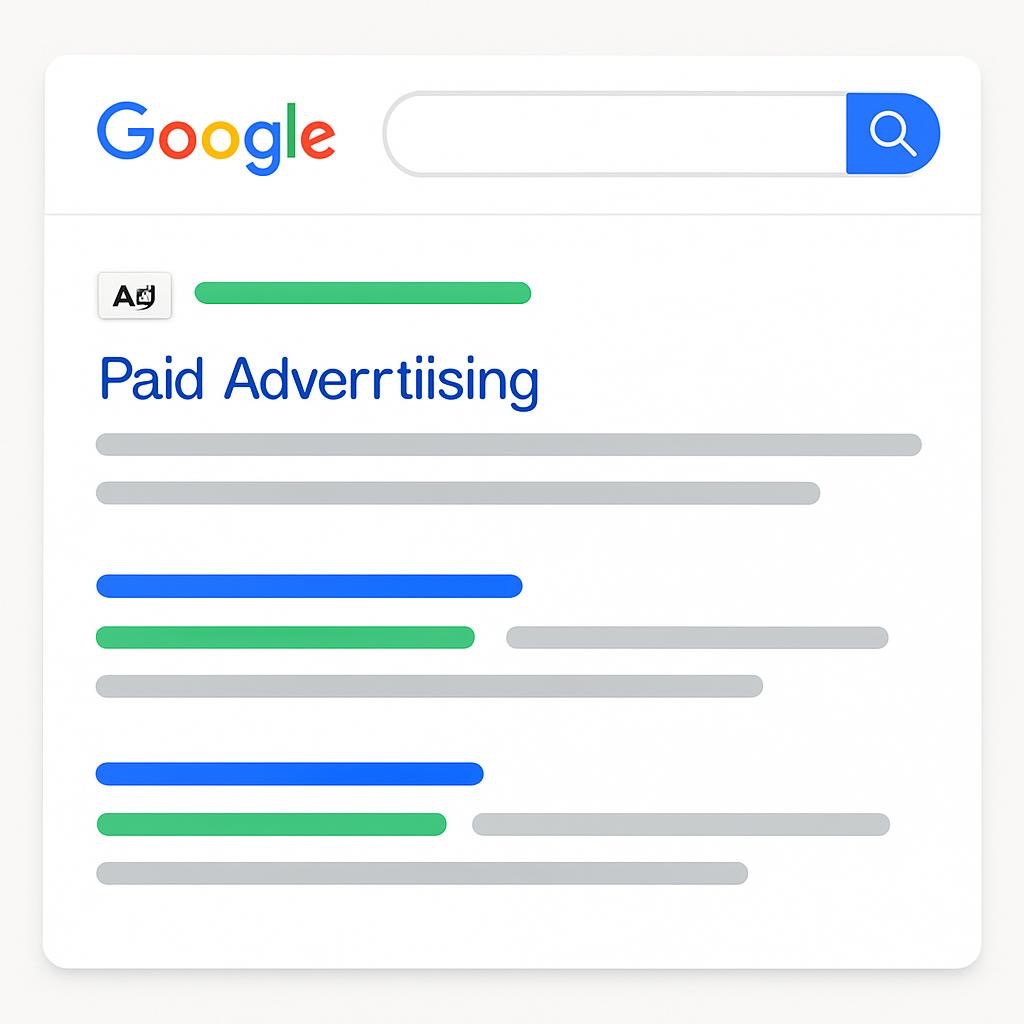
One of the quickest ways a business can appear at the top of Google is paid search. Unlike organic search, which involves much time and consistency in practice, paid search allows companies to take advertisements straight to users who are truly searching out a product or service. Advertisers select keywords they think users will search for and then bid on those keywords through Google Ads. Each time a user pops a search query into Google, an auction occurs in near real time. Google then determines which ads to display and in what order. This happens every single time a user performs a search, making paid search highly competitive. Google utilizes something called Ad Rank, which is determined through a combination of bid amount, ad quality, and the expected impact of ad extensions. That means businesses with a smaller budget can compete as long as they create relevant ads and a solid user experience. This surprised me because I originally thought paid ads were only effective for businesses with huge advertising budgets.
Another big concept with paid search is something called Quality Score. It essentially measures how relevant and useful your ad is to the user. It takes into account keyword relevance, click-through rate, and landing page experience. The higher the Quality Score, the cheaper your cost per click can be, and even better ad placement. This shows how critically you want to write clear ad copy and send users to landing pages that actually match what they searched for. Additionally, Google Ads is highly capable of careful budget control by the advertisers themselves. Businesses are able to set daily spending limits, strategies for bidding, and then modify the campaigns depending on performance. The flexibility piques interest in both small and large businesses in paid searches.
Due to the low risk of wasting money, if a campaign is not working as anticipated, tweaks can be done instantly without waiting for weeks or months before seeing some positive changes. Another characteristic of paid search that really stood out for me is the issue of intent. Paid search works even better because it reaches out to users with a certain level of intent. Someone searching for “SEO services near me” is surely closer to making a decision than any random social media user. For businesses just trying to generate leads, sales, or conversions, that is the real value in paid search. That’s why it’s crucial to track performance metrics like click-through rate, conversion rate, and the cost of conversion. Google Ads offers detailed reporting, enabling advertisers to understand exactly what is working and what needs refinement. Another key learning from the paid search course is that it has the best effect when highly integrated with quality onsite and offsite SEO work. Paid search gives a business visibility right away, but organic SEO builds long-term authority and trust. Running the two together means a business can capture short-term traffic while investing in growth for the long term.
This class helped me to get an overview of paid search and Google Ads, developing an idea that online advertising could be strategic and data-driven, rather than just paying money for clicks. It’s actually more about relevancy ads, capturing the intent of users, and working toward continuous optimization of campaigns. Another key factor of paid search that I picked up on is ad copy and extensions. Ad copy is something more than just keyword inclusion; it’s clearly explaining value in a very minute piece of real estate. Ad extensions sitelink or callouts-are additional pieces of information that help provide context and give advertisements some more visibility. Extensions like that can help improve click-through rates but also contribute to a higher Ad Rank, reinforcing the fact that paid search success isn’t about simply spending more money. After taking this class, the use of google ads just makes much more sense to me and it showed me how you can use google ads to get your brand/product out there in front of the right audience at the right time.
Leave a Reply