
Title tags inform search engines about what a page contains and are commonly displayed as the search result click headline. Meta descriptions provide a brief description of what is on a page. When effectively written, they should entice users to click through to the site. Well-structured headings make it simpler for readers to comprehend the contents. “Internal linking is another major SEO practice that needs to be implemented,” says Loewenberg. “It allows you to link various pages of your website that are related in some way,” Loewenberg explains. “For SEO purposes, it helps distribute rankings or authority between various pages of the website that you deem important.” This would include posting from the blog page to the services page or vice versa. Page loading speed and mobile friendliness are other factors that affect SEO on a website. Page loading speed can result in loss of user engagement and a higher bounce rate. Search engines tend to rank those websites that load quickly and are mobile-friendly. Content quality is what onsite SEO is centered on. Search engines tend to favor the page that contains the best information. Content should be geared toward readers for their own purposes, not necessarily targeted SEO readers. It should be straightforward with answers to frequent queries. URL structuring is another crucial aspect of onsite SEO. When URLs are organized in the simplest manner, it becomes easier for both the end user and search engines to understand what is actually being linked.
When structuring a URL, you should make it relevant to your keywords but not filled with numbers or special characters. User experience is another area that is significant to onsite SEO. Search engines monitor what the user does on the webpage. A further key onsite SEO consideration is the organization of content on the page. Pages that are organized into distinct sections make it easier for users to comprehend the information that is provided. Large sections of text can be overwhelming for many users, especially users who are viewing a page on their mobile devices. Websites that use shorter paragraphs with headings make it easier for users to navigate the page and locate the information that they seek. It also facilitates the search engine’s ability to understand the organization of the information on the page as well as what the key information is.
Internal linking is another key onsite SEO practice that can improve user navigation of the website. When it is easier for users to navigate between pages of the website, they are more likely to stay longer on the website. A reduced bounce rate is imperative since it is an indicator that the website is of good quality. Websites are optimized for each screen size. Search engines strive to gain more traffic from search engines that are optimized for mobile devices, as it is easier for users to navigate through the page. Readability is still another onsite SEO practice that works in favor of a website’s optimization. Content on a website should be clear and easier for readers to understand. Other onsite SEO practices that influence the rankings of a website by search engines include various software considerations such as HTML structuring, security, or optimized code. Even though such considerations are invisible to the user, search engines rely heavily on such factors for the search engine process to be effective.
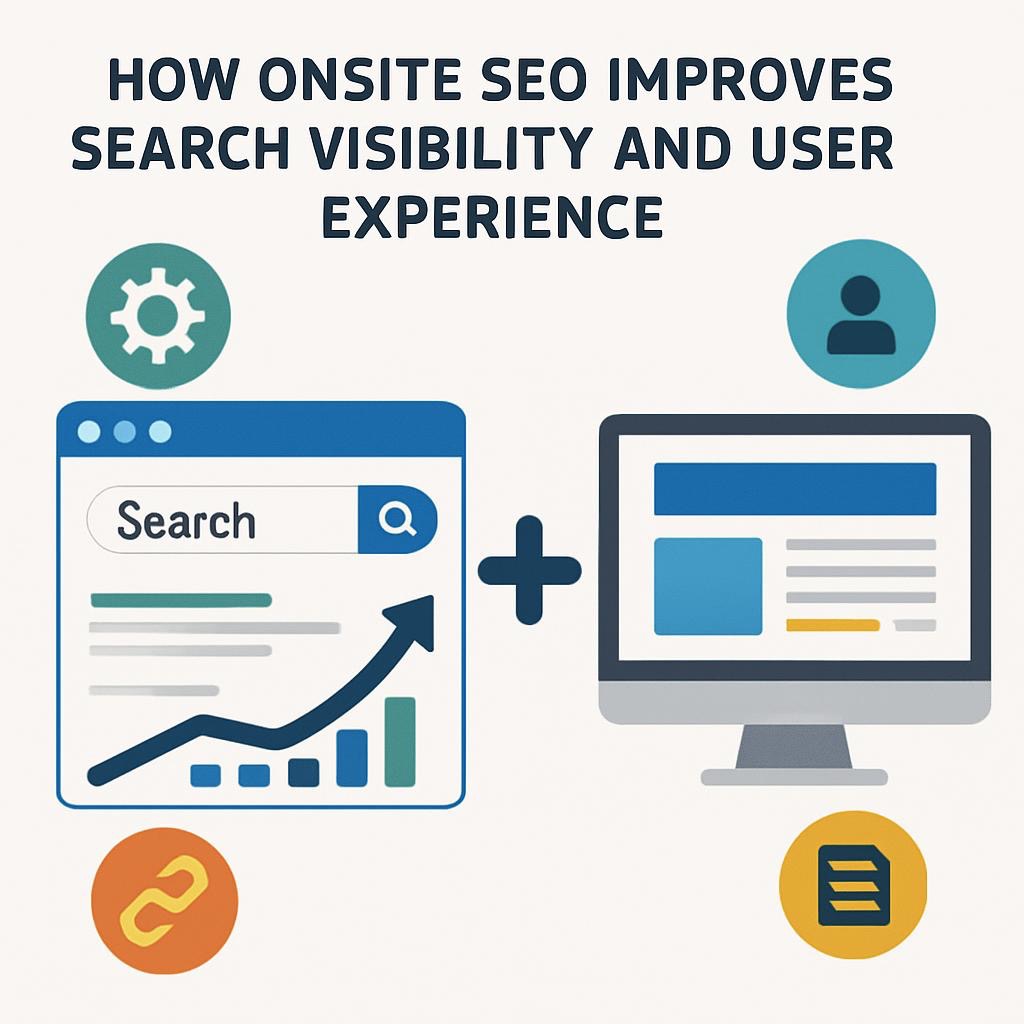
A website that is optimized using such software is effective in allowing search engines to reach page information with more efficiency. Upon learning about onsite SEO, it is evident that onsite SEO is more about improving search rankings. Additionally, it is about offering a positive user experience. A webpage that is positive to navigate and loads quickly could be of great use to both the user and the search engines. And because of this, onsite SEO bridges the gap between optimizing a webpage from a technical approach and offering meaningful information.
Leave a Reply